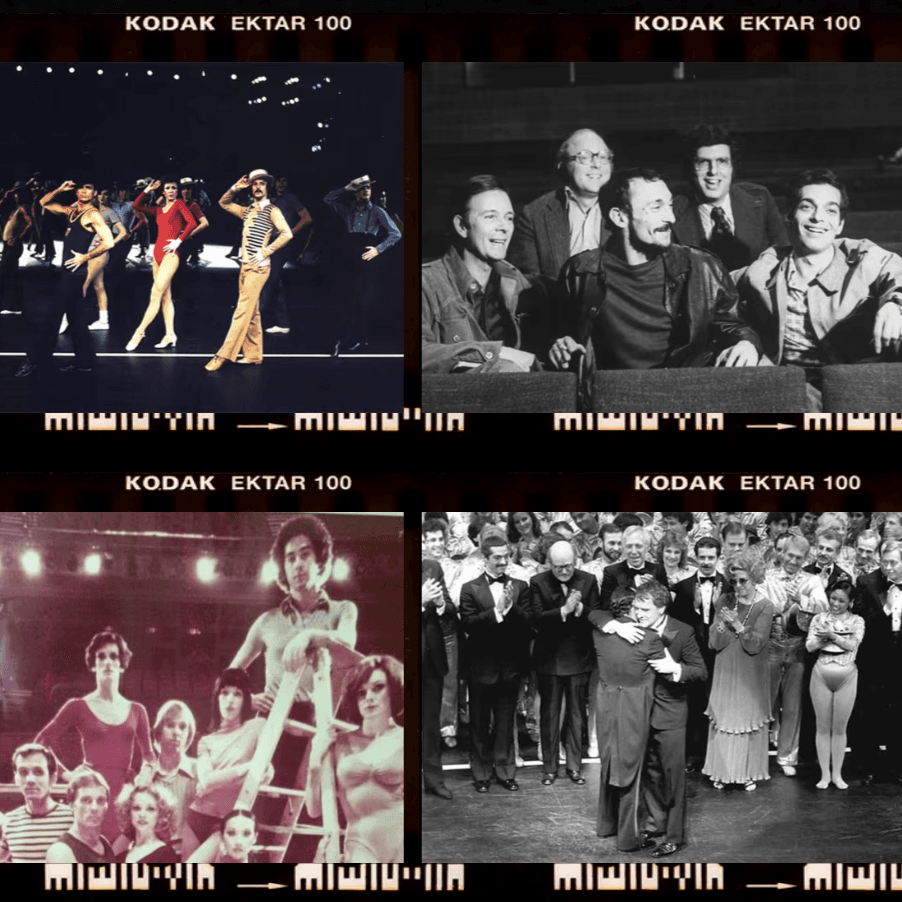
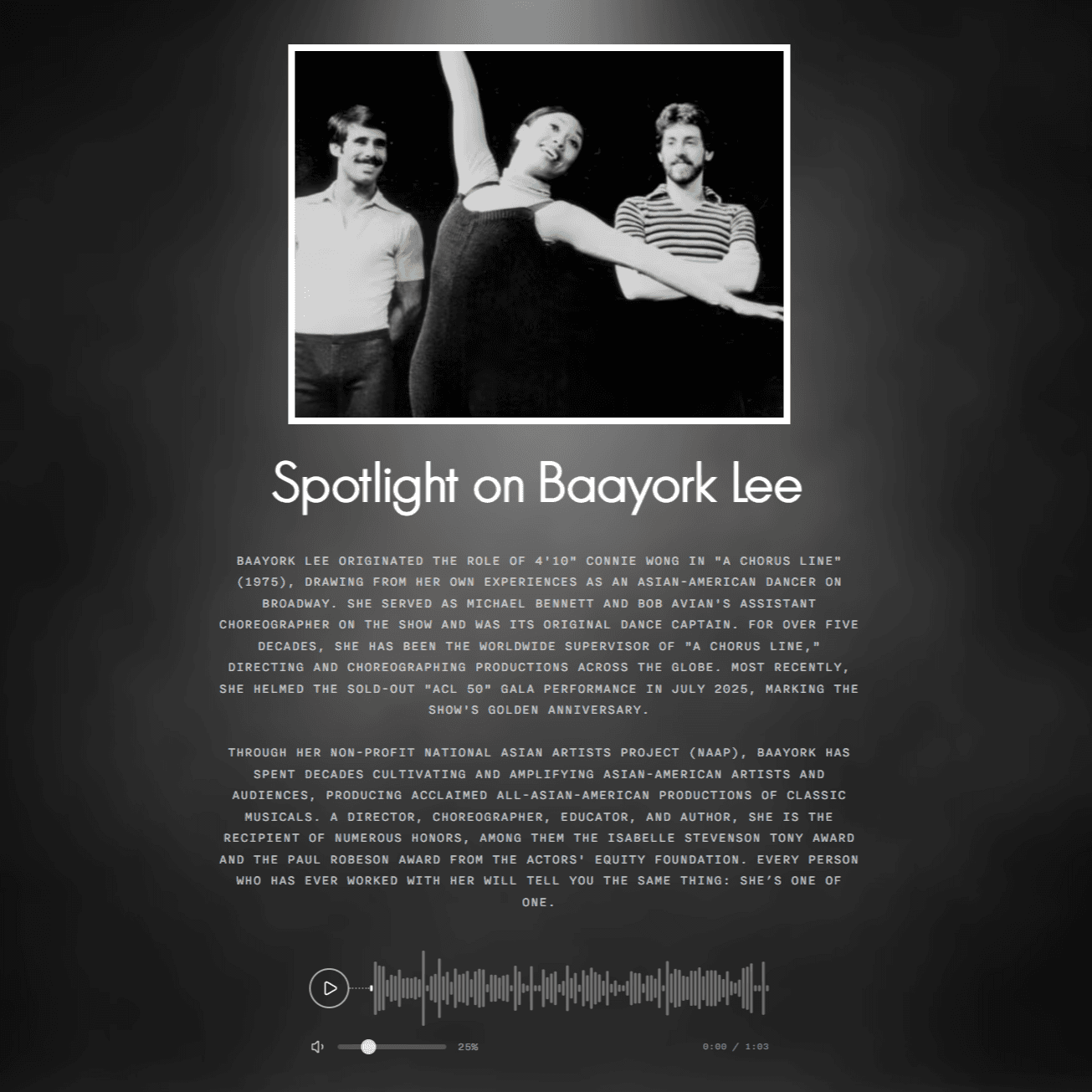
Minute.tech built the project from the ground up, creating a complete brand identity and a custom web platform on Linkbase House that brings Bennett's story to life through archival shows, an interactive map of his New York, and an ongoing editorial rollout.
Application Development / Creative Design / Digital Support / Motion GraphicsYear: 2026
Category: Non-profit
Mirror Man started as a labor of love. Natalie Guevara had spent years researching the life and work of Michael Bennett, the director and choreographer behind "A Chorus Line" and "Dreamgirls" whose career was cut short when he died during the AIDS epidemic in 1987. She had the research, the archival relationships, and the voice. What she did not have was a brand, a website, or any digital identity to carry the project. Everything needed to be created from scratch, and it needed to be worthy of its subject. The source material made this anything but a standard build. The archive spans decades of newspaper clippings, opening night telegrams, contact sheets, photography, video, and audio, and the site had to present all of it in a way that felt period-authentic without ever reading as a dusty museum. Bennett was Broadway's master of spectacle, so a static gallery of scans was never going to be enough. On top of that, the project was always planned as a rolling release, with show pages publishing in installments over months, which meant the platform had to launch incomplete by design while still feeling whole to every visitor. There was also a deadline: April 8, 2026, Michael Bennett's birthday. The launch date was the point. That gave us a fixed window to deliver brand identity, design, motion, content tooling, and a full custom build, with final copy and archival materials still arriving in the closing weeks.
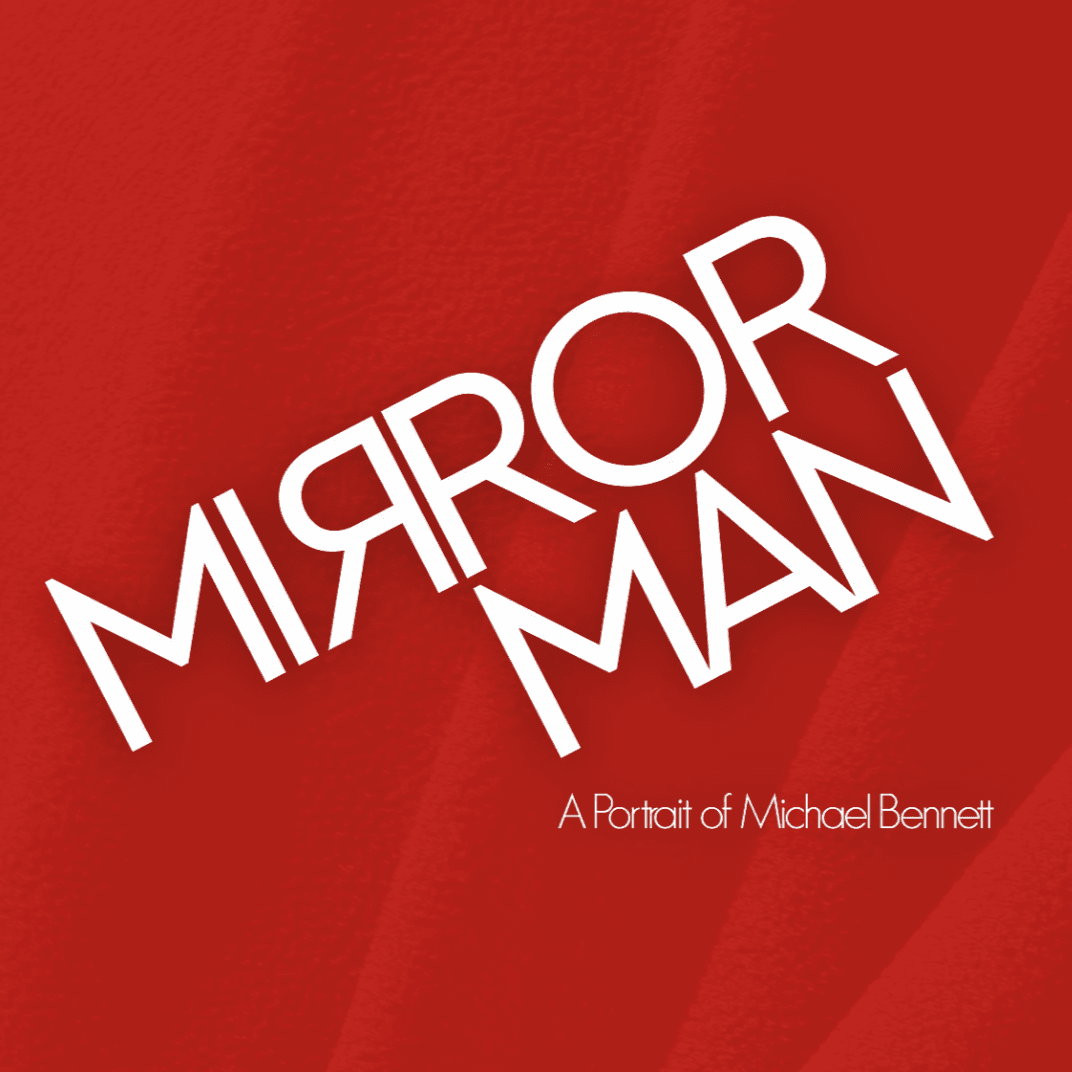
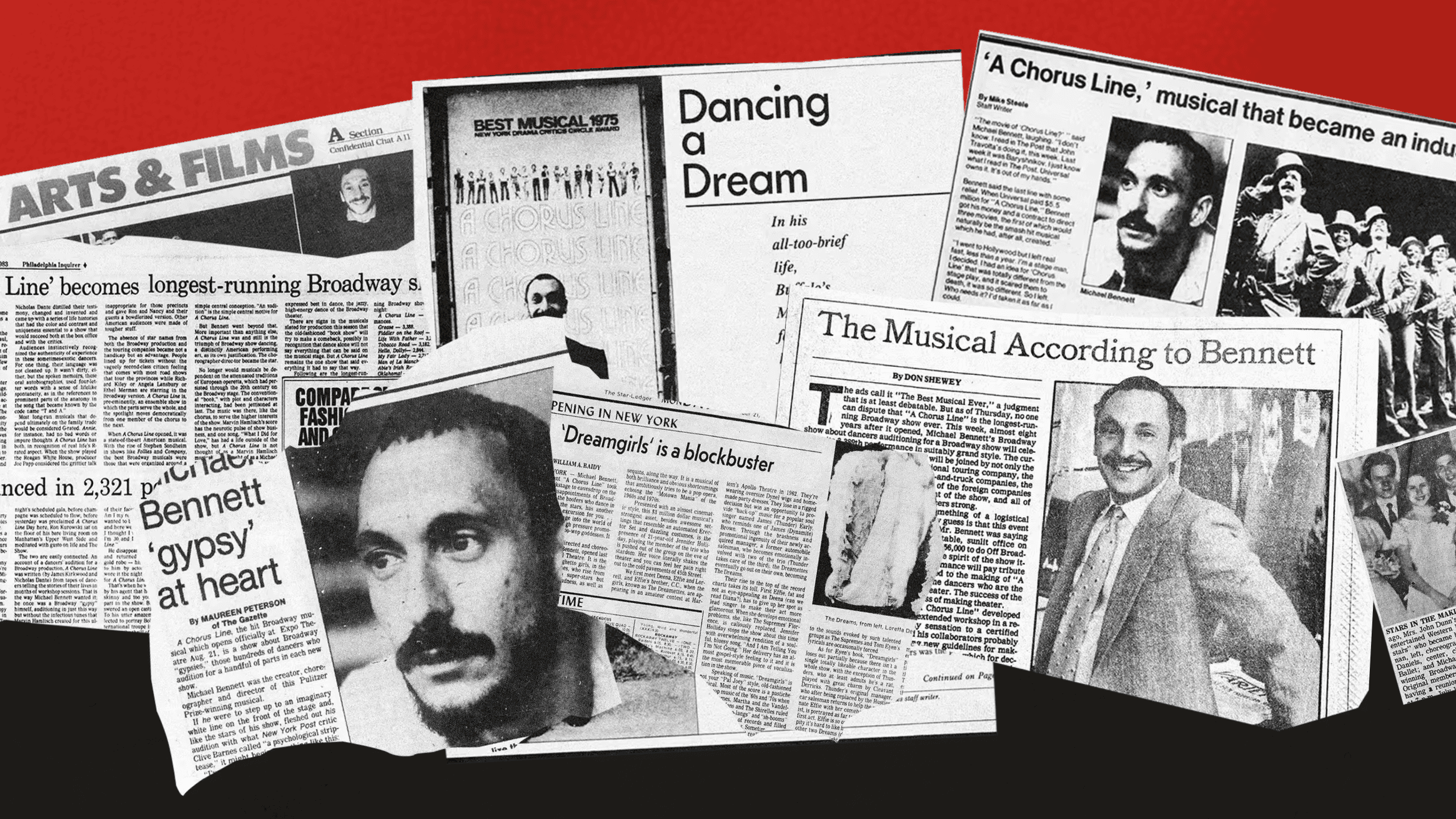
We started with the identity. The name pointed the way: Bennett loved mirrors, filled his rehearsal studios with them, and choreographed them into his shows, so the logotype reverses its own letterforms to reflect itself. The palette pairs a theatrical curtain red with a warm paper off-white, pulled from the aging newsprint and telegrams that anchor the archive. Typography and texture follow the same instinct, drawing from mid-century Broadway ephemera so the brand feels like it could have existed in Bennett's own era. The identity now extends well beyond the screen, onto Substack, social templates, and physical merchandise from embroidered hats to branded tissue paper and mailers. The site itself was wireframed in Figma and iterated closely with Natalie, then built on Linkbase House, our proprietary codebase. Rather than dropping archival material into generic layouts, we designed custom interactions around each format: opening night telegrams play as auto-advancing slideshows over vintage New York street scenes, show footage runs inside a retro television set with an on-switch, and "Michael's New York" maps the places that shaped his life and career as an interactive pin-by-pin experience. The shows index presents his full body of work from "A Joyful Noise" through "Dreamgirls," including his unrealized productions, with "A Chorus Line" launching as the first fully built show page and more rolling out over time. Because Natalie publishes the project herself, the CMS mattered as much as the front end. Show pages, captions, galleries, site configuration, and the newsletter subscriber system are all managed from one admin dashboard, and the platform supported a password-protected preview mode so stakeholders could review the full experience privately before launch. Beyond the site, our team edited video and audio from archival interview footage for the project's YouTube channel, and designed a Spotlight Series social template system, delivered as editable Canva files, so Natalie can produce Instagram assets that drive readers to her Substack writeups on Bennett's shows and history. The stack is Next.js and TypeScript on Vercel behind Cloudflare.
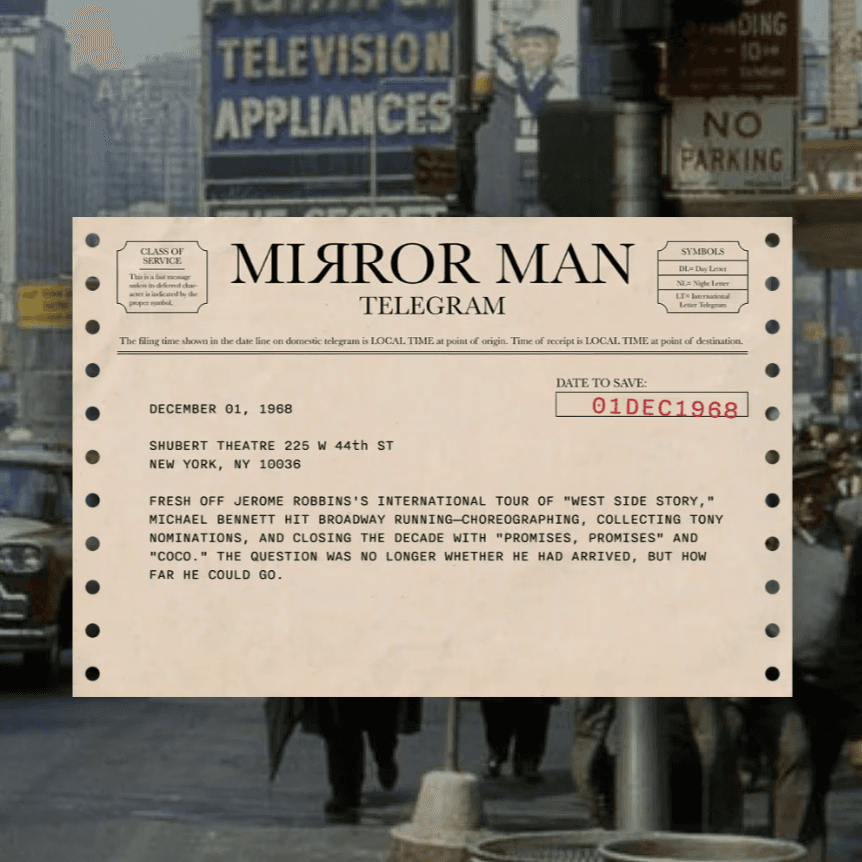
Mirror Man launched on April 8, 2026, Michael Bennett's birthday, with a cohesive identity and platform that holds its own against productions with far larger teams behind them. The brand is distinctive and deeply tied to its subject, the archival interactions turn research into something visitors actually explore, and the rolling show page model gives the project a reason for audiences to keep returning as new chapters publish. The relationship is ongoing. Minute.tech supports Mirror Man through a Digital Support Plan covering hosting, security, and feature work, while the social and editorial collaboration continues as new Spotlight Series posts and show pages roll out. As our first digital legacy project, Mirror Man also proved out something we care about: that the same craft we bring to commercial brands can preserve a life's work and introduce it to a new generation. It was an honor to help memorialize Michael, and a credit to Natalie's love for Broadway and the arts that the project exists at all.
View Live Site